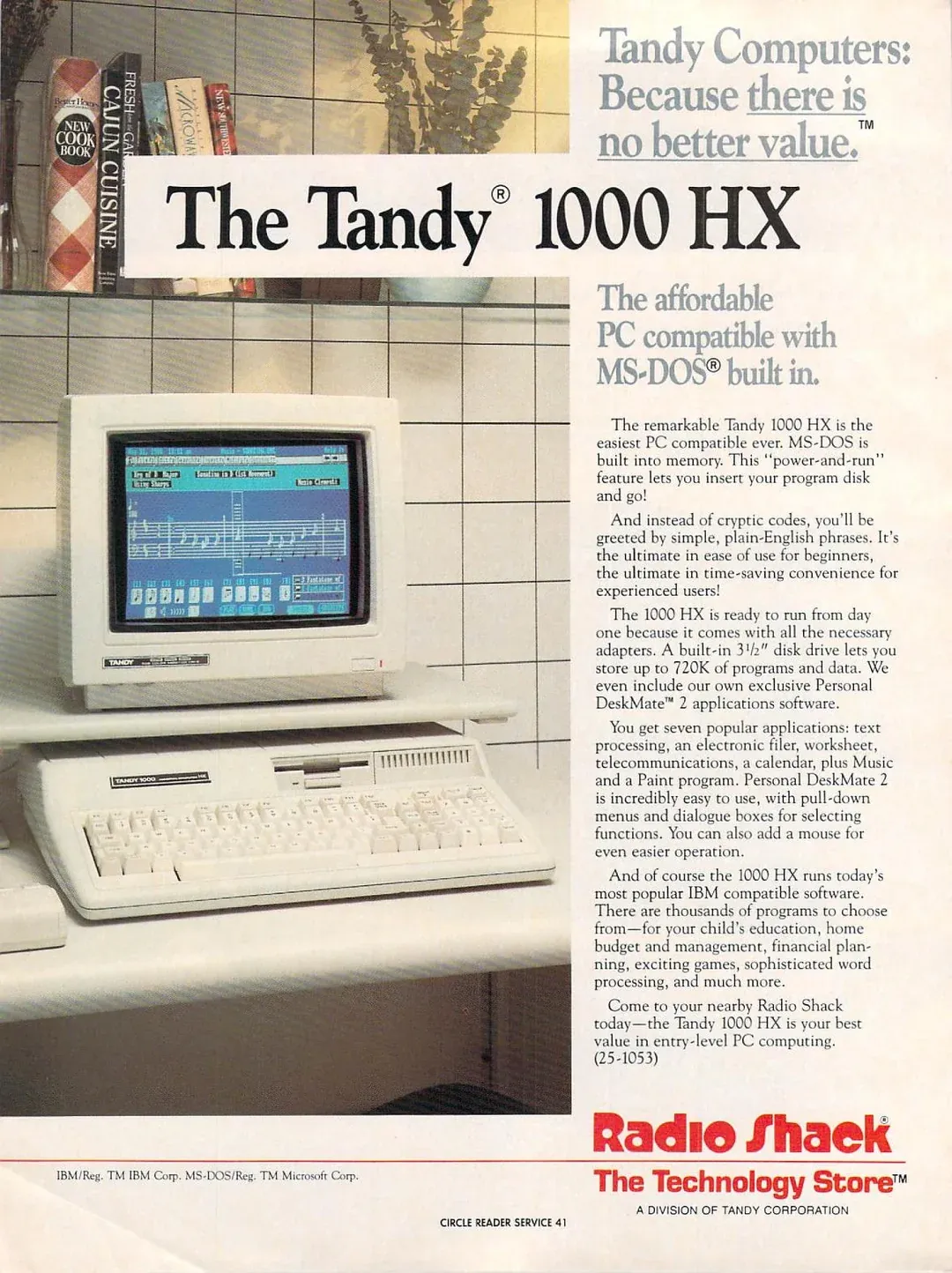
Tandy 1000 HX: Why This Retro PC Still Hits Hard Today
The Tandy 1000 HX was one of those machines that punched way above its weight. If you grew up in the late ’80s or early ’90s, you probably saw one of these compact, weirdly charming little beige boxes sitting in a Radio Shack display like it owned the place. And it kinda did. The Tandy brand was everywhere. It was the gateway computer for a ton of families before the big names like Compaq, Dell, and IBM became household staples.
This post breaks down why the Tandy 1000 HX had such a massive impact, why retro tech collectors still go after it today, and what actually made it fun to use.
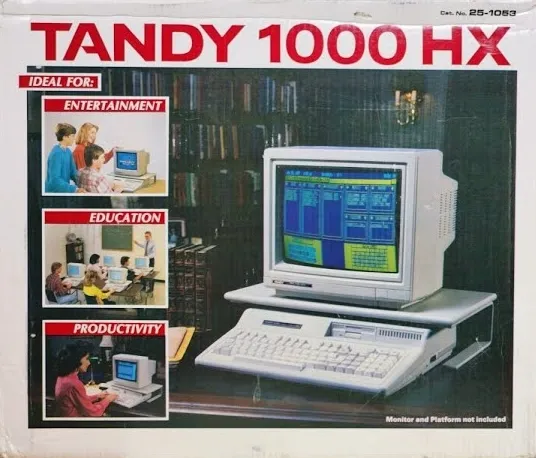
What Made the Tandy 1000 HX Stand Out?
The Tandy 1000 HX wasn’t the biggest, baddest, most powerful machine of its time. But it was the most practical for the average home user. My thing with retro machines like this is simple: if the experience is fun and the hardware has personality, I’m in.
The HX excelled at that.
Key specs that mattered back then
- CPU: Intel 8088 @ 7.16 MHz (solid for its era)
- Memory: 256 KB standard, expandable to 640 KB
- Storage: Built-in 3.5” drive + ROM-based “DeskMate” apps
- Graphics: Tandy Graphics Adapter (TGA) — better than IBM CGA
- Sound: Tandy 3-voice sound — massive upgrade over PC speaker
- Operating System: MS-DOS (with some Tandy-specific flavor)
This mix created a machine that played DOS games better than most entry-level IBM compatibles.
The Tandy 1000 HX and Its Surprisingly Good Gaming Experience
If you know, you know: the Tandy 1000 HX was built for DOS gaming. Not officially. But functionally? Absolutely.
Most “IBM compatible” machines were limited to basic CGA visuals and that awful single-tone speaker beep. Tandy came in and said:
“Let’s blow past CGA. Let’s add real sound. Let’s give families something fun.”
Here’s why games on the Tandy 1000 HX slapped:
- Tandy Graphics Adapter offered 16 colors in 320x200 resolution.
- Tons of DOS games had built-in Tandy support because RadioShack sold everything.
- 3-voice sound chip made games feel alive compared to the sad PC speaker chirps.
If you want specifics, titles like King’s Quest, Space Quest, Leisure Suit Larry, Zork Zero, and Maniac Mansion absolutely shine on this system.
The Tandy 1000 HX wasn’t just “good” at games. It was the best budget option for gaming in the late ’80s.
Tandy 1000 HX: The All-in-One Home Computer Before iMac Made It Cool
The HX had a vibe: small, sleek, lightweight, with the keyboard slotting into the front like a Nintendo cartridge.
Why the design mattered:
- Took up minimal desk space
- Built-in 3.5” drive (rare for the time)
- Quiet, simple, low-maintenance
- Meant to be a family machine, not a business brick
You popped it on a kitchen table, hooked up the monitor, and you were off. No giant towers. No five expansion cards. No heat issues. No fan noise the size of a lawn mower.
It was friendly, approachable, and not intimidating—a huge part of why families bought it.
The Software That Made Tandy 1000 HX More Useful Than People Remember
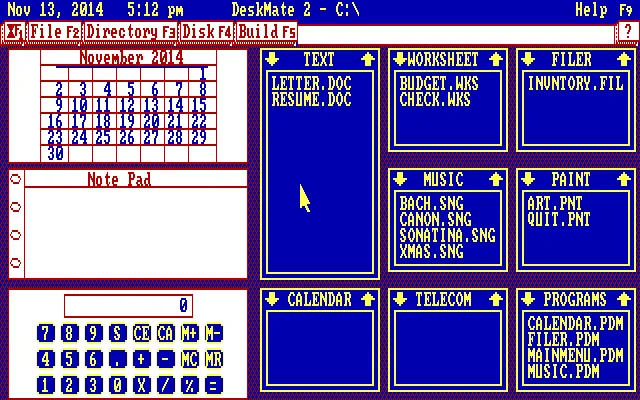
The Tandy 1000 HX shipped with DeskMate baked into ROM. That meant you turned the machine on and—boom—instant productivity suite.
DeskMate included:
- Word processing
- Address book
- Paint program
- Music editor
- Basic file manager
- Calendar
That’s basically the 1987 equivalent of pre-installed apps on your phone.
Most early home computers needed you to insert a floppy just to type anything. The HX didn’t. And that convenience actually matters more than people give it credit for.
How the Tandy 1000 HX Compares to Other Tandy Models
Tandy dropped an entire family of machines under the 1000 line: EX, SX, TX, TL, RL, and so on.
Here’s how the HX stacks up.
Tandy 1000 HX vs EX
- Same compact design
- HX upgraded to a 3.5” drive
- HX had better overall expandability
Tandy 1000 HX vs TX/TL
- TX/TL were more powerful
- But bigger and more business-focused
- HX wins for home gaming
Tandy 1000 HX vs RL/SL
- RL/SL were newer but locked down
- HX is easier to upgrade and mod
Expanding and Modding a Tandy 1000 HX Today
Let’s talk upgrades. Because modding these things is half the fun.
Popular HX upgrades:
- Memory expansion to 640 KB
- Sidecar expansions (modems, RAM, storage, etc.)
- XT-IDE cards (to use compact flash as a hard drive)
If you’re comfortable tinkering, the HX becomes way more capable than anyone from the ’80s ever imagined.
FAQs about the Tandy 1000 HX
Was the Tandy 1000 HX good for gaming?
Yes. It was one of the best budget DOS gaming machines of the late ’80s thanks to Tandy graphics and 3-voice sound.
Does the Tandy 1000 HX need special software?
No. It runs normal MS-DOS software, plus games that specifically support Tandy graphics and sound.
Can you upgrade the HX?
Absolutely. RAM, storage, and sidecar expansions are all possible. However, back in its day, technology was moving quick and many owners quickly outgrew what the HX could offer, even with upgrades.
Final Thoughts: The Tandy 1000 HX Deserves Its Place in Retro History
The Tandy 1000 HX wasn’t the most powerful computer, the most expensive computer, or even the most famous computer of its time. But it was the right computer for thousands of families. And it still holds up today for anyone who loves retro PC gaming, collecting, modding, or just firing up an old machine for the memories.